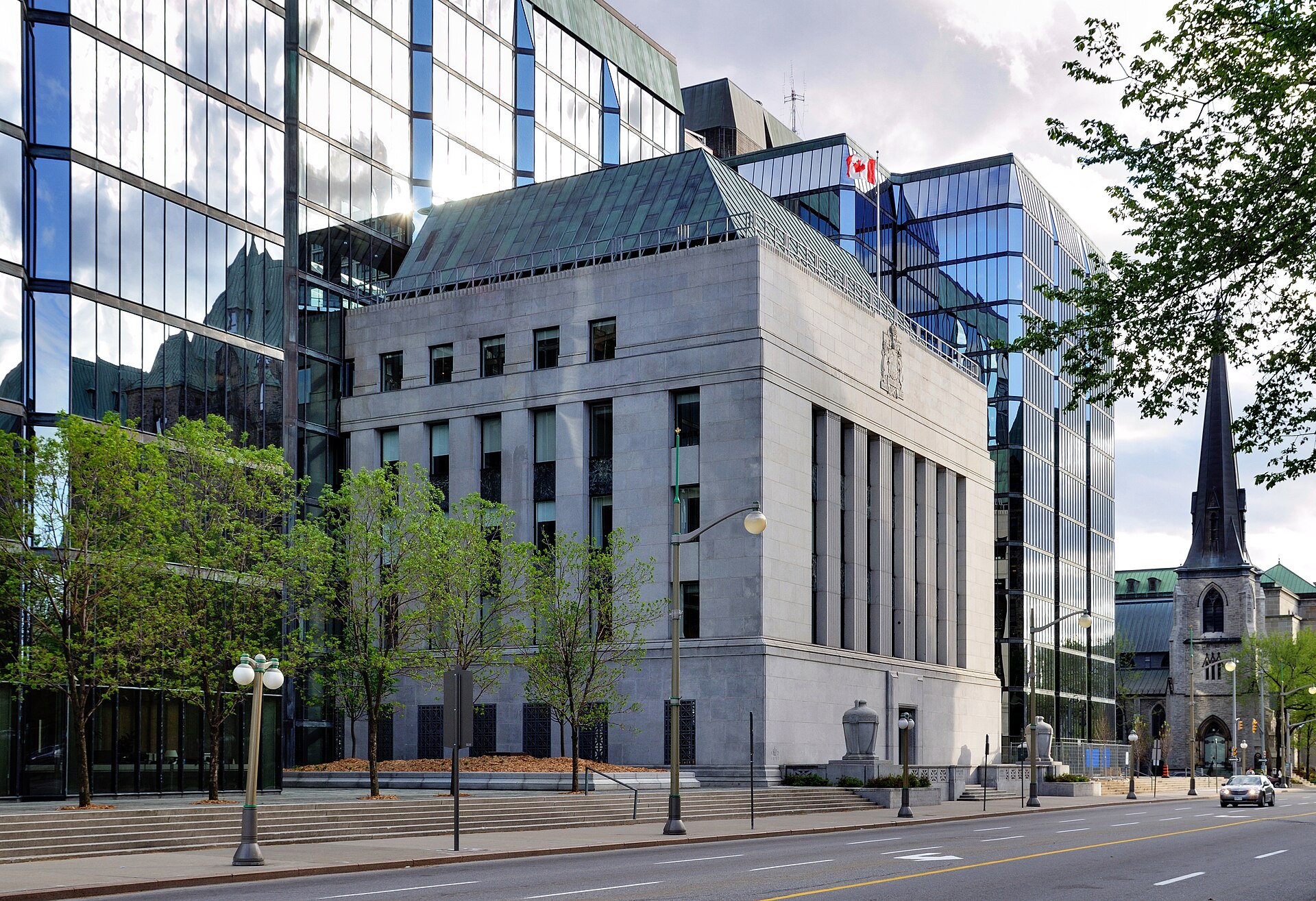
October 20, 2026. A week ago the October 28 Bank of Canada decision looked like another hold. Not anymore. September inflation came in at 3.1%, the Bank’s own business and consumer surveys showed inflation expectations moving up, and by Monday afternoon swap markets were pricing roughly an 80% chance of a quarter-point Bank of Canada rate hike next week, up from about 35% on Friday, according to Bloomberg data reported by The Globe and Mail. Here is what changed, what it means for variable and fixed mortgages, and what GTA buyers and sellers should do in the eight days before the decision.
1. September inflation: 3.1% headline, but core is near 2%
Statistics Canada reported on October 19 that the Consumer Price Index rose 3.1% year over year in September, up from 3.0% in August. Gasoline did most of the work: gas prices were up 27.8% from a year earlier (22.8% in August), and energy overall rose 19.0%. Excluding gasoline, inflation actually slowed to 2.2% from 2.4%.
The details matter for housing:
- Shelter rose 1.8% (1.5% in August), pushed by fuel oil and a 4.9% jump in homeowners’ home and mortgage insurance.
- Rent rose 2.8%, the same pace as August.
- The mortgage interest cost index fell 0.2%, and homeowners’ replacement cost fell 1.9%.
- Groceries slowed to 1.7%, the smallest yearly increase since May 2024.
- Ontario had the lowest inflation of any province at 2.5%.
The Bank of Canada’s preferred core measures also eased: CPI-trim was 1.8% and CPI-median 1.9%, both a notch lower than in August. The headline figure was also a little below the 3.2% economists expected. So why did markets react as if the news were bad?
2. Why markets now expect a hike anyway
Three things outweighed the soft core numbers:
- Macklem’s weekend comments. Speaking to reporters after the IMF meetings in Bangkok, Governor Tiff Macklem said the Bank expects to revise its inflation forecast up because oil prices are much higher than it assumed. “If oil prices stay around US$100, we expect inflation to gradually drift up from where it is today: 3 per cent,” he said, adding that the question is whether inflation will come back toward 2% on its own “or are we going to have to raise interest rates.”
- Consumers expect more inflation. The Bank’s third-quarter Canadian Survey of Consumer Expectations, released October 19, showed five-year-ahead inflation expectations jumping to 3.91% from 3.39% in the second quarter. One-year expectations were 4.03% and two-year expectations 3.88%. Expectations at all horizons moved higher after Canada-US trade talks broke down.
- Businesses plan to pass costs on. In the Business Outlook Survey, roughly half of firms said they plan to pass on some or all of their cost increases from the Middle East war and tariffs, more than last quarter. Almost one-quarter of firms said it was too hard to say when inflation will return to 2%.
Bond markets moved fast. Bank of Canada data show the benchmark 2-year Government of Canada yield closed at 3.33% on October 19, up from 3.21% on October 16, and the 5-year yield rose to 3.64% from 3.54%. Several Bay Street forecasters switched their October 28 call from hold to hike, although that is still a minority view. RBC’s base case remains no hikes until 2027, with risks tilted toward an earlier move. The policy rate has been 2.25% for about a year.
Bottom line: October 28 is now a live decision. A hike is not certain, but nobody buying, selling or renewing in the GTA should assume rates are going down this fall.
3. The housing market was already cooling: CREA September
The Canadian Real Estate Association reported on October 16 that national home sales fell 2.3% from August and were 7.7% below September 2025. New listings dropped 1.8% month over month. The MLS Home Price Index slipped 0.4% in the month and was down 3.4% from a year earlier, and the national average sale price was $666,538, down 1.6%. CREA said the monthly price dip reflected “a fresh step down for prices in Ontario where demand softened in September.”
The national sales-to-new-listings ratio eased to 48.8% and there were 4.9 months of inventory, both in balanced-market territory. CREA also cut its 2026 forecast for the third time this year and now expects 5.2% fewer sales than in 2025, then a 4.4% rebound in 2027 if rate changes stay limited. Senior economist Shaun Cathcart pointed to “the latest jump in fixed mortgage rates” and a Bank of Canada “now widely expected to follow with a rate hike before the end of the year.”
For the GTA, TRREB’s September numbers (October 6) told the same story: 5,040 sales, down 9% year over year, and an average price of $1,006,409, down 5.1%. We broke those numbers down in our TRREB September 2026 report. October data from TRREB arrives in early November, after the rate decision.
4. What a rate hike would cost: variable and HELOC borrowers
A Bank of Canada hike moves the banks’ prime rate, which sits at 4.45% today. Variable-rate mortgages and home equity lines of credit (HELOCs) are priced off prime, so they feel a hike first. Some simple examples (our math, 25-year amortization, monthly compounding, illustrative rates):
| Borrower | Today | After a 0.25-point hike | After two hikes (0.50 point) |
|---|---|---|---|
| $600,000 variable mortgage at 4.20% | $3,234/month | $3,318/month (+$84) | $3,403/month (+$170) |
| $100,000 interest-only HELOC at prime + 0.5% (4.95%) | $412.50/month | $433.33/month (+$20.83) | about $454/month |
If your variable mortgage has a fixed payment, your payment may not change right away, but more of it goes to interest and your amortization stretches. Ask your lender for your trigger rate. We covered the variable and HELOC playbook in more depth after Macklem’s Halifax speech in our variable mortgage and hike-risk guide.
5. Fixed rates have already moved, and may move again
Fixed mortgage rates follow Government of Canada bond yields, not the overnight rate, which is why they have been rising for weeks without a single Bank of Canada hike. All six big banks have raised fixed rates, some terms by up to half a percentage point in five weeks. BMO’s standard 5-year fixed rose to 5.14% on October 7, and National Bank became the latest to move on October 16, lifting its 5-year uninsured rate to 5.14%. The Bank of Canada’s posted 5-year conventional rate rose to 6.19% on October 7, from 6.09%.
When the National Bank change landed, the 5-year yield had eased to about 3.53% from a 52-week high of 3.729%, and some lenders were trimming select fixed rates. Monday’s jump to 3.64% erased that relief, so watch for another round of increases.
Here is what half a point means on a typical GTA purchase or renewal (our math, Canadian semi-annual compounding, 25-year amortization):
- $800,000 mortgage at 4.64%: about $4,490 a month.
- Same mortgage at 5.14%: about $4,717 a month, or $227 more. Over a five-year term that is roughly $13,593 more in payments.
- Qualifying is tougher too. OSFI’s stress test uses the greater of your contract rate plus 2% or 5.25%, so a 5.14% rate means qualifying at 7.14%, a payment of about $5,673 on the same $800,000.
To see what that does to your price range, use our affordability calculator or read our step-by-step guide, Can I afford a mortgage in Toronto in 2026?
6. What GTA buyers should do before October 28
- Get a rate hold now. A pre-approval with a rate hold locks today’s fixed rate for a set period (ask your lender how long). If rates rise, you are protected, and many lenders will give you the lower rate if rates fall before you close.
- Re-run your budget at a higher rate. Test your monthly payment at today’s rate plus 0.5 point on the Ontario mortgage calculator. If it only works at today’s rate, lower your price range.
- Use the softer market. With sales down 9% year over year in the GTA and prices down 5.1%, buyers have more room on price and conditions than they did in the spring. Keep financing and inspection conditions in your offer.
- Put money back in your pocket at closing. With National Home Realty’s buyer cash back, you can get up to 50% of the cooperating commission NHR receives. On a $1,000,000 home at a 2.5% commission, that is $12,500 when your first offer goes in within 7 days of your first showing ($8,750 in days 8 to 14, $6,250 in days 15 to 21). The amount depends on the commission NHR actually receives and is set out in your written agreement. That is about two and a half months of payments on the $800,000 example above.
7. What GTA sellers should do
- Price for the buyers who are actually out there. Higher fixed rates shrink buyers’ budgets. A listing priced for spring 2026 will sit. TRREB’s average listing days on market was 34 in September.
- Do not wait for rate relief. If markets are right, borrowing costs go up next week, not down. Waiting until spring means competing with a new wave of listings and possibly higher rates.
- Cut what you pay to sell. When prices are soft, the commission is often the biggest cost you can control. With NHR’s $6,000 + HST flat fee listing ($6,780 with HST), a seller on a $1,000,000 home keeps $21,470 more than with a 2.5% listing commission ($28,250 with HST). Any commission offered to the buyer’s agent is separate. See every line in our 2026 seller net sheet.
- Selling and buying? Combine both: the flat fee on your sale and cash back on your purchase. On a $1,000,000 sale and a $1,000,000 purchase, that can add up to $33,970.
8. The calendar from here
- October 26: Toronto municipal election. The municipal land transfer tax is on the ballot as an issue (see our election and land transfer tax breakdown).
- October 28: Bank of Canada rate decision and the October Monetary Policy Report, with Macklem’s updated inflation forecast.
- Early November: TRREB’s October market report and October jobs data.
- November 16: October CPI from Statistics Canada.
Bottom line
September’s inflation report was better than feared under the surface, with core inflation below 2%, but the Bank of Canada is now worried about oil-driven inflation spreading, and markets have moved to price a hike on October 28. Fixed rates are already higher, and variable borrowers may be next. For buyers, that means locking a rate hold and negotiating hard in a soft market. For sellers, it means pricing realistically and keeping more of your equity. Buying? Get your estimate on the buyers cash-back page. Selling? See what you keep on the sell your home page.
Sources
- Statistics Canada, The Daily: Consumer Price Index, September 2026 (October 19, 2026) and CPI by province
- Bank of Canada, Consumer price index and core measures (CPI-trim, CPI-median)
- Bank of Canada, Business Outlook Survey, Third Quarter of 2026 and Canadian Survey of Consumer Expectations, Third Quarter of 2026 (survey data), October 19, 2026
- Bank of Canada, Government of Canada benchmark bond yields, policy interest rate and posted rates and prime rate (Valet data retrieved October 20, 2026)
- The Globe and Mail, Financial markets betting on BoC rate hike next week despite subdued inflation data (Macklem quotes, swap-market odds)
- Investing.com, Canadian bond yields jump as sticky inflation clouds Bank of Canada outlook (October 19, 2026; 3.2% consensus)
- CREA, October 16, 2026 national statistics release and CBC News, CREA revises down 2026 home sales forecast again
- Canadian Mortgage Trends, National Bank latest big bank to raise fixed mortgage rates (October 16, 2026) and Yahoo Finance Canada, All six big banks raised fixed mortgage rates by up to 0.5 points in five weeks (October 11, 2026)
- OSFI, Minimum qualifying rate for uninsured mortgages
- TRREB, September 2026 market release and Market Watch, September 2026
- National Home Realty, Buyers cash-back rebate and Sell your home
This article is general information only, not mortgage, legal, tax or brokerage advice. Payment examples use the stated illustrative rates, a 25-year amortization and simple math; your lender’s rates and terms will differ, and market expectations for the October 28 decision can change quickly. Cash back depends on the commission National Home Realty actually receives and your written agreement. Confirm every figure with your lender, lawyer and National Home Realty before you rely on it. National Home Realty is powered by Cityscape Real Estate LTD., Brokerage.