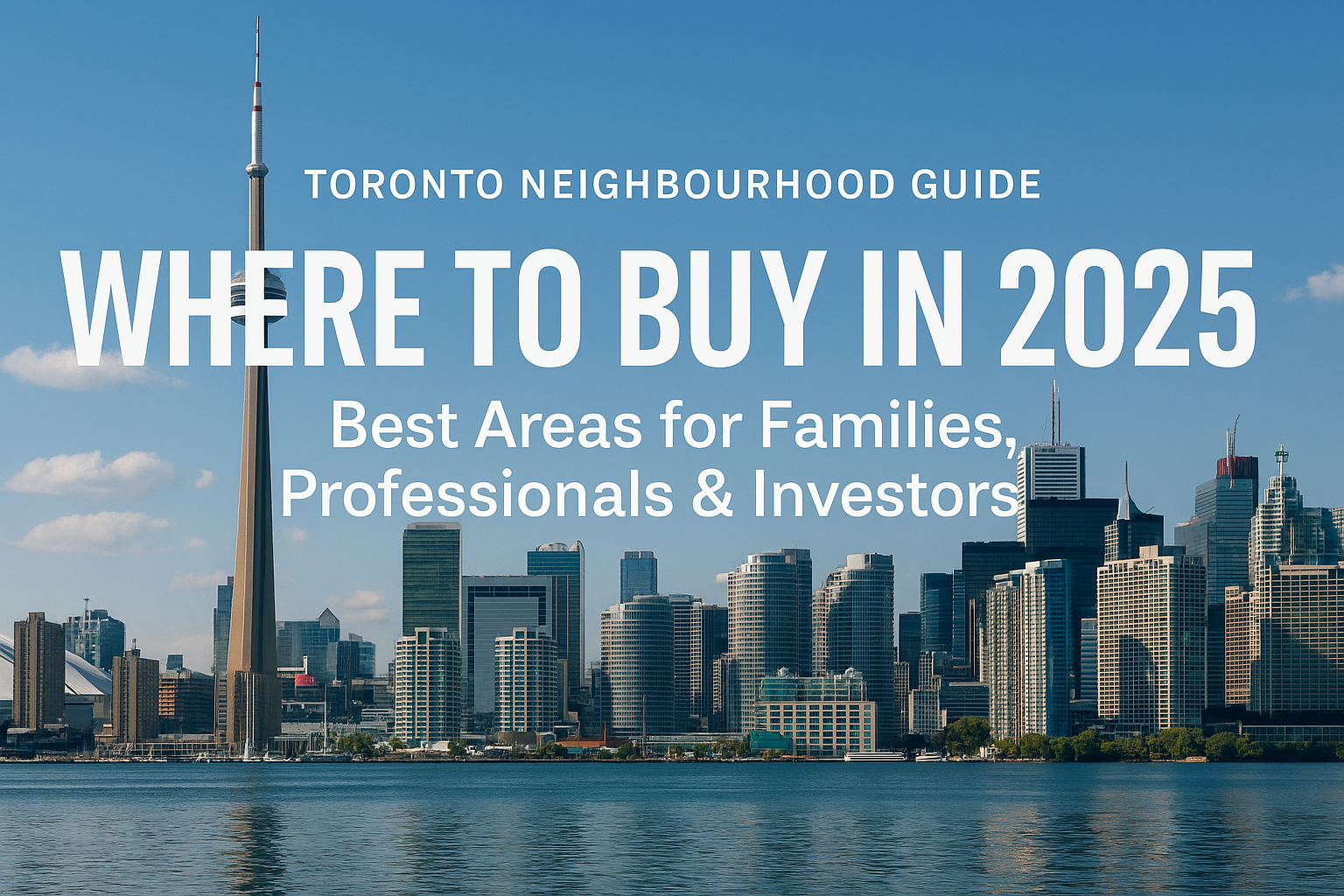
Toronto Neighborhood Guide: Where to Buy in 2025 – Best Areas for Families, Professionals & Investors
Choosing the right Toronto neighborhood is arguably the most critical decision you’ll make when buying a home. With over 140 distinct neighborhoods across the city, each offering unique characteristics, amenities, and lifestyle advantages, the selection process can feel overwhelming. In 2025, Toronto’s real estate landscape continues to evolve, with emerging neighborhoods offering exceptional value while established communities maintain their prestige and desirability.
This comprehensive guide breaks down the best Toronto neighborhoods for different buyer profiles, including families seeking top-rated schools and parks, young professionals prioritizing walkability and nightlife, luxury homebuyers demanding prestige and privacy, and investors hunting for up-and-coming Toronto areas with strong growth potential.
Understanding Toronto’s Neighborhood Dynamics in 2025
Before diving into specific neighborhoods, it’s essential to understand the factors that make Toronto’s real estate market unique. The city’s housing market has shown remarkable resilience despite economic headwinds, with certain neighborhoods outperforming others based on infrastructure development, transit expansion, and demographic shifts.
According to recent market analysis, Toronto real estate investment opportunities have shifted from traditional core neighborhoods to emerging districts benefiting from major transit projects like the Eglinton Crosstown LRT and Ontario Line. Meanwhile, family-friendly areas continue commanding premium prices due to their proximity to top-rated schools and recreational facilities.
The Best Family-Friendly Toronto Neighborhoods
For families with children or those planning to start a family, neighborhood selection extends far beyond property features. School quality, park access, community safety, and proximity to family-oriented amenities become paramount considerations. Let’s explore the top family-friendly areas in Toronto that consistently rank highest for raising children.
The Beaches: Waterfront Living with Village Charm
The Beaches neighborhood (also called “The Beach” by locals) represents one of Toronto’s most desirable family communities. Located along Lake Ontario’s shoreline in the city’s east end, this neighborhood offers a unique combination of urban convenience and resort-style living that’s increasingly rare in major metropolitan areas.
$1.4M – $2.1M
95/100
87/100
8.5/10 average
What Makes The Beaches Special: This neighborhood boasts over three kilometers of sandy beaches, a scenic boardwalk perfect for morning jogs and evening strolls, and Queen Street East’s vibrant shopping and dining corridor. Families appreciate the abundance of parks including Kew Gardens and Woodbine Beach Park, along with excellent public and private schools.
The housing stock primarily consists of detached Victorian and Edwardian homes, many lovingly restored and updated, alongside newer luxury builds. The neighborhood’s strong sense of community is evidenced by numerous family-friendly events throughout the year, including the popular Beaches International Jazz Festival.
- Direct beach access and waterfront trails
- Excellent walkability scores with shops, restaurants, and services within easy reach
- Strong community feel with active residents’ associations
- Top-rated schools including Williamson Road Junior Public School
- Safe, established neighborhood with low crime rates
- Premium pricing reflecting desirability
- Limited inventory creating competitive bidding situations
- Summer tourist traffic along Queen Street and the boardwalk
High Park: Nature Lover’s Paradise
Named after Toronto’s largest and most beloved public park, the High Park neighborhood in the city’s west end represents an ideal choice for families prioritizing outdoor recreation and green space. This established community seamlessly blends natural beauty with urban amenities, making it one of the most sought-after family-friendly areas in Toronto.
Average Home Price: $1.3M – $1.9M
High Park itself encompasses 400 acres of trails, sports facilities, picnic areas, a zoo, and even a hillside amphitheater hosting free Shakespeare performances each summer. The neighborhood surrounding the park features tree-lined streets with beautiful homes ranging from classic Victorian row houses to spacious detached properties with generous lots.
Educational Excellence: The area is served by several outstanding schools including Humberside Collegiate Institute, one of Toronto’s premier secondary schools consistently ranking among the city’s best. Elementary options like Keele Street Junior Public School and Runnymede Junior and Senior Public School maintain excellent reputations.
The Bloor West Village shopping district serves as the neighborhood’s commercial heart, offering an authentic village atmosphere with independent boutiques, cafes, and restaurants. Families appreciate the walkable, safe streets and strong sense of community fostered through numerous local events and festivals.
Leaside: Suburban Feel Within the City
Leaside stands out as Toronto’s quintessential family neighborhood, offering a suburban lifestyle while remaining technically within city limits. Located in the central-east portion of Toronto, this affluent community is characterized by winding, tree-canopied streets, well-maintained homes, and an exceptional quality of life that attracts professional families.
The neighborhood was originally developed as a planned community in the early 20th century, and this thoughtful design remains evident today. Wide streets, generous lots, and abundant green space create an environment where children can safely play and families can establish roots for generations.
School Excellence: Leaside is renowned for its outstanding schools, both public and private. Bessborough Drive Junior Public School and Northlea Junior and Middle School consistently rank among Toronto’s top elementary institutions. Leaside High School maintains an excellent academic reputation, making the neighborhood particularly attractive to families prioritizing education.
Best Toronto Neighborhoods for Young Professionals
Young professionals typically prioritize different factors when selecting a neighborhood. Proximity to employment centers, vibrant nightlife, walkability, transit access, and a social atmosphere often trump school quality and park space. Toronto offers several neighborhoods perfectly suited to this demographic’s lifestyle and priorities.
Liberty Village: Urban Energy and Modern Living
Liberty Village has transformed from a former industrial district into one of Toronto’s most dynamic neighborhoods for young professionals. Located just west of downtown, this master-planned community epitomizes contemporary urban living with its concentration of modern condo towers, converted loft spaces, and new amenities.
The neighborhood attracts career-focused millennials working in downtown’s financial district, as well as creative professionals employed by the area’s numerous tech startups, marketing agencies, and media companies that have established offices in converted industrial buildings.
Lifestyle and Amenities: Liberty Village offers everything young professionals desire within walking distance. Trendy cafes, fitness studios, restaurants, bars, and boutique retailers line Liberty Street and East Liberty Street. The neighborhood’s industrial-chic aesthetic appeals to style-conscious residents who appreciate the area’s modern vibe.
$650K – $850K
96/100
28-35 years
92/100
Transit connectivity is excellent, with multiple streetcar routes providing quick access to downtown’s Union Station. The neighborhood also benefits from proximity to the Gardiner Expressway for those who drive to work or travel frequently.
For those exploring the Toronto condo market, Liberty Village represents one of the most liquid neighborhoods with constant inventory turnover and strong rental demand supporting investment strategies. Many young professionals purchase here with plans to rent out their units if they relocate, knowing the area’s appeal to their demographic ensures consistent tenant interest.
King West: Entertainment District Living
King West has established itself as Toronto’s premier entertainment district and a top choice for young professionals who want to be at the center of the action. This neighborhood, stretching along King Street West from Bathurst to Spadina, offers an unparalleled combination of nightlife, dining, arts, and culture.
The area features Toronto’s highest concentration of upscale restaurants, nightclubs, cocktail bars, and entertainment venues. Residents can walk to work in the Financial District, enjoy world-class performing arts at the nearby theatre district, or experience the city’s best culinary offerings without ever needing a car.
Residential Options: The Toronto condo market in King West predominantly consists of modern high-rise towers with luxury amenities including concierge services, fitness centers, party rooms, and rooftop terraces. Many buildings feature stunning city views and designer finishes appealing to professionals with discerning tastes.
Leslieville: Creative Community with Character
Often called Toronto’s “Brooklyn,” Leslieville has evolved into a haven for creative professionals, artists, and entrepreneurs seeking a neighborhood with authentic character and a thriving independent business scene. Located east of the Don Valley, this neighborhood offers a more laid-back alternative to the intensity of downtown living while maintaining excellent urban amenities.
Queen Street East serves as Leslieville’s main artery, lined with independent boutiques, vintage shops, art galleries, craft breweries, and some of Toronto’s most Instagram-worthy cafes and brunch spots. The neighborhood attracts young professionals working in creative industries who appreciate the area’s artistic vibe and community-oriented atmosphere.
Housing Character: Unlike the condo towers dominating other young professional neighborhoods, Leslieville features a diverse housing stock including Victorian row houses, converted industrial lofts, and newer low-rise condo developments. This variety appeals to young professionals ready to transition from renting to homeownership, as the neighborhood offers options across various price points.
The area’s walkability scores rank among Toronto’s highest, with residents able to accomplish daily errands, grocery shopping, dining, and entertainment entirely on foot. This pedestrian-friendly character contributes to strong community bonds and an active street life that makes the neighborhood feel vibrant and safe at all hours.
Luxury Toronto Neighborhoods for Discerning Buyers
Toronto’s luxury real estate market is concentrated in several prestigious neighborhoods where luxury homes Toronto buyers expect not just exceptional properties, but also privacy, exclusivity, heritage, and proximity to elite private schools and country clubs. These areas command premium prices justified by their timeless prestige and limited housing supply.
Rosedale: Toronto’s Most Prestigious Address
Rosedale has maintained its position as Toronto’s most prestigious neighborhood for over a century. This affluent community, located just north of the downtown core, is characterized by winding ravine roads, mature tree canopies, grand heritage estates, and an atmosphere of refined elegance found nowhere else in the city.
Average Home Price: $3.5M – $8M+
The neighborhood’s layout was deliberately designed to create privacy and exclusivity, with curving streets that discourage through traffic and provide residents with a serene, park-like environment despite being minutes from downtown. Many properties sit on large lots with extensive gardens, a rarity in Toronto’s increasingly dense urban landscape.
Architectural Heritage: Rosedale showcases some of Toronto’s finest residential architecture, with many homes designated as heritage properties. Tudor Revival, Georgian, and Victorian styles predominate, though contemporary renovations often hide behind these classic facades, offering modern luxury within historic exteriors.
The area attracts business leaders, professionals, and established families who value discretion, tradition, and understated wealth over flashy displays. It’s not uncommon for properties to remain in families for generations, contributing to the neighborhood’s stability and exclusivity.
Forest Hill: Old Money and Generational Wealth
Forest Hill rivals Rosedale as Toronto’s premier luxury neighborhood, attracting some of Canada’s wealthiest families to its tree-lined streets and magnificent estates. This upscale community, located in central Toronto, has long been associated with old money, generational wealth, and the city’s most prominent business families.
The neighborhood is divided into two sections: Forest Hill North and Forest Hill South, both offering exceptional properties and prestigious addresses. Upper Canada College, one of Canada’s most elite private boys’ schools, anchors the area, while Bishop Strachan School serves as the female equivalent, attracting families prioritizing elite education.
Property Characteristics: Forest Hill homes typically feature substantial square footage on generous lots, often 50+ feet wide. Many properties include separate coach houses, extensive landscaped gardens, and luxury features like wine cellars, home theaters, and indoor pools. The neighborhood showcases diverse architectural styles from Tudor and Colonial Revival to modern custom builds designed by Toronto’s premier architects.
Yorkville: Urban Luxury and Sophistication
Yorkville represents a different expression of luxury—one favoring urban sophistication, high-rise living, and proximity to world-class shopping and dining. This neighborhood, centered around Bloor Street and Yorkville Avenue just north of downtown, has evolved into Canada’s answer to Rodeo Drive or Fifth Avenue.
The area attracts celebrities, business executives, and international buyers who desire luxury condo living with immediate access to designer boutiques, five-star hotels, Michelin-worthy restaurants, and cultural institutions like the Royal Ontario Museum and Royal Conservatory of Music.
Condo Living Redefined: Yorkville’s luxury condo market sets Toronto’s standard for high-end residential development. Buildings feature 24-hour concierge service, valet parking, resident wine cellars, private dining rooms, and penthouse units commanding $5-20 million with spectacular city views and designer finishes by renowned international firms.
For professionals working in finance, law, or corporate leadership, Yorkville offers the ultimate lock-and-leave lifestyle with building amenities eliminating home maintenance concerns while providing walking access to downtown offices and business districts.
Up-and-Coming Toronto Neighborhoods: Smart Investment Opportunities
Savvy investors and value-conscious homebuyers increasingly focus on up-and-coming Toronto neighborhoods positioned for significant appreciation. These transitional areas offer current affordability combined with catalysts suggesting future growth—whether major transit infrastructure, demographic shifts, or commercial revitalization.
Mount Dennis: Eglinton West’s Rising Star
Mount Dennis, located in Toronto’s northwest at the intersection of Weston Road and Eglinton Avenue West, represents one of the city’s most compelling investment opportunities. The completion of the Eglinton Crosstown LRT has transformed this formerly overlooked neighborhood into a transit-oriented development hub attracting significant attention from developers and investors.
Average Home Price: $800K – $1.1M
The neighborhood offers a stark value proposition compared to established areas—detached homes that would cost $2+ million in central Toronto are available here for under $1.2 million. This affordability, combined with dramatically improved transit connectivity, positions Mount Dennis for substantial appreciation over the next 5-10 years.
Transit Infrastructure: Mount Dennis station serves as the western terminus of the Eglinton Crosstown LRT and features a connection to the UP Express providing rapid access to Pearson International Airport and downtown’s Union Station. This dual rapid transit connectivity is rare outside downtown and creates significant location value.
- Substantial price discounts versus comparable properties elsewhere
- Major transit infrastructure recently completed
- Active development pipeline with new residential and commercial projects
- Large lots providing development or renovation potential
- Proximity to employment centers including Pearson Airport area
For first-time homebuyer Toronto purchasers and investors seeking Toronto real estate investment opportunities with strong upside potential, Mount Dennis offers compelling value that’s increasingly difficult to find within city limits.
Scarborough: Affordable Toronto with Major Upside
Scarborough, Toronto’s eastern district comprising multiple distinct neighborhoods, has long been dismissed by some buyers but increasingly attracts attention from value seekers and investors recognizing its substantial long-term potential. Major infrastructure investments, affordable housing, and improving amenities are transforming perceptions of this diverse area.
Transit Expansion: The planned Scarborough Subway Extension will replace the aging RT line with modern subway service connecting Scarborough Town Centre to Line 2, dramatically improving connectivity to downtown and other parts of the city. This $5+ billion infrastructure investment will fundamentally change accessibility and property values in affected areas.
Scarborough offers the city’s most affordable detached homes, with many neighborhoods featuring properties under $1 million—often with substantial lots and recent renovations. For first-time homebuyer Toronto families unable to afford central neighborhoods, Scarborough provides genuine homeownership opportunities rather than settling for small condos.
$900K – $1.2M
30-40% discount
Projected 25-35%
4.5-6%
Neighborhood Diversity: Scarborough isn’t monolithic—it encompasses dozens of distinct communities each with unique characteristics. Areas like Cliffside, West Hill, and Birch Cliff offer waterfront access, while neighborhoods near Scarborough Town Centre provide urban amenities and strong rental demographics from nearby institutions.
Junction Triangle: Industrial Chic Meets Residential Growth
The Junction Triangle, bounded by the rail corridors west of downtown, exemplifies Toronto’s pattern of industrial-to-residential neighborhood transformation. This small but rapidly evolving area has attracted artists, young professionals, and investors drawn by relatively affordable housing and authentic urban character.
The neighborhood’s industrial heritage remains visible in converted factory lofts and warehouse spaces now serving as creative studios, tech offices, and residential units. This industrial aesthetic appeals to buyers seeking character and authenticity rather than cookie-cutter suburban developments.
Commercial Revival: Dupont Street and Wallace Avenue are experiencing commercial revitalization with new cafes, breweries, restaurants, and independent retailers replacing vacant industrial uses. This small-scale, organic commercial growth creates the neighborhood vibrancy that often precedes broader real estate appreciation.
The Junction Triangle’s location between established neighborhoods like The Junction proper and Corso Italia positions it to benefit from spillover demand as those areas become increasingly unaffordable. Creative professionals and young families are discovering they can access more space and character here than in pricier nearby alternatives.
Comparing Toronto Neighborhoods: Key Factors to Consider
Beyond individual neighborhood profiles, successful homebuyers evaluate locations using consistent criteria that align with their personal priorities and long-term goals. Understanding how to assess best Toronto neighborhoods systematically helps ensure you select the right area for your specific situation.
Walkability Scores and Transit Access
Walkability scores have become increasingly important to Toronto homebuyers, particularly millennials and professionals who prefer accessing daily needs on foot rather than by car. Walk Score rates neighborhoods on a 0-100 scale based on proximity to amenities, with scores above 90 considered “Walker’s Paradise” where most errands can be accomplished on foot.
- Liberty Village – 96
- King West – 98
- The Beaches – 95
- Leslieville – 94
- Yorkville – 99
- Annex – 97
Transit connectivity complements walkability, determining how easily residents can reach employment centers and other parts of the city without driving. Toronto’s subway system (TTC) provides rapid transit along key corridors, while streetcars and buses fill gaps in coverage. Neighborhoods with subway stations typically command price premiums reflecting the convenience value.
The upcoming transit expansion projects—including the Ontario Line, Eglinton West Extension, and Scarborough Subway Extension—will dramatically reshape the city’s accessibility patterns and property values. Smart investors are identifying neighborhoods positioned to benefit from these multi-billion dollar infrastructure investments before completion drives prices higher.
School Ratings and Educational Quality
For families, school quality often serves as the primary neighborhood selection criterion. Toronto offers both excellent public schools through the Toronto District School Board (TDSB) and Toronto Catholic District School Board (TCDSB), plus numerous private school options for families preferring alternative education approaches.
Parents can research school quality through provincial testing results (EQAO scores), Fraser Institute rankings, and School Rankings online platforms that aggregate multiple quality indicators. Family-friendly areas with top-performing schools typically maintain higher property values and experience less price volatility during market downturns.
| Neighborhood | Top Elementary School | Average Rating | School Premium |
|---|---|---|---|
| Leaside | Bessborough Drive PS | 9.2/10 | 15-20% |
| The Beaches | Williamson Road PS | 8.8/10 | 12-18% |
| High Park | Keele Street PS | 8.5/10 | 10-15% |
| Rosedale | Rosedale PS | 9.0/10 | 18-25% |
| Forest Hill | Forest Hill PS | 9.4/10 | 20-30% |
The “school premium” reflects the estimated price increase properties command due to location within highly-rated school catchment areas. Families often pay substantial premiums for this educational access, viewing it as an investment in their children’s future while also preserving resale value.
Safety and Crime Statistics
Neighborhood safety significantly impacts quality of life and property values. Toronto overall enjoys relatively low crime rates compared to similarly-sized North American cities, but meaningful variation exists between neighborhoods that buyers should research.
The Toronto Police Service publishes crime statistics by neighborhood, allowing prospective buyers to review trends in property crime, violent offenses, and other safety indicators. Generally, established residential neighborhoods with strong community associations and active residents report lower crime rates than transitional areas or those with concentrations of commercial and entertainment uses.
Evening walk tests—visiting neighborhoods after dark to observe street activity, lighting, and overall atmosphere—provide valuable subjective safety assessments that complement statistical data. Family-friendly areas typically feature well-lit streets, visible pedestrian activity, and maintained properties signaling resident investment in neighborhood quality.
Future Development and Infrastructure Projects
Understanding planned development and infrastructure projects helps buyers anticipate how neighborhoods will evolve over their ownership period. Major catalysts driving neighborhood transformation include:
- Transit Expansion: New subway stations, LRT lines, and GO Transit improvements dramatically increase accessibility and attract development
- Commercial Revitalization: Business Improvement Areas (BIAs) undertaking streetscape improvements and attracting new retailers signal upward trajectory
- Residential Development: Major condo or master-planned communities bringing new residents and amenities to previously underserved areas
- Public Space Investment: New parks, community centers, libraries, and public facilities improving neighborhood livability
- Institutional Growth: Universities, hospitals, and major employers expanding facilities creating job growth and housing demand
Investors seeking up-and-coming Toronto opportunities should focus on neighborhoods where multiple catalysts converge—for example, an area benefiting from both new transit access AND commercial revitalization likely offers stronger appreciation potential than one with a single improvement in isolation.
Toronto Condo Market: High-Rise Living Considerations
The Toronto condo market has exploded over the past two decades, with high-rise developments reshaping the skyline and providing housing for hundreds of thousands of residents. For buyers considering condo living, understanding neighborhood-specific market dynamics is crucial for making sound investment decisions.
Condo Supply and Market Saturation
Not all Toronto neighborhoods feature similar condo market conditions. Areas like CityPlace, Liberty Village, and the core downtown have experienced extensive condo development, creating high supply levels that can impact price appreciation and rental rates. Conversely, neighborhoods like The Beaches, Leslieville, and residential north Toronto have minimal condo inventory, with new projects commanding premiums due to scarcity.
Buyers should research:
- Existing Inventory: How many condo units currently exist in the neighborhood?
- Pipeline Projects: How many additional units are under construction or planned?
- Absorption Rates: How quickly do new projects sell and how long do resale units sit on market?
- Rental Competition: For investors, what’s the rental vacancy rate and how many units compete for tenants?
High-supply neighborhoods may offer better purchase price value but face appreciation headwinds from ongoing competition. Low-supply areas command premiums but often deliver stronger appreciation due to constrained inventory.
Building Quality and Reputation
In the Toronto condo market, the specific building matters as much as the neighborhood. Reputation varies dramatically between developers, with premium builders like Tridel, Daniels, and Menkes consistently delivering quality construction and thoughtful design, while budget developers cut corners resulting in maintenance issues and special assessments.
Experienced buyers research building-specific factors including:
- Developer track record and reputation
- Building age and condition of major systems (HVAC, elevators, building envelope)
- Reserve fund status—adequate reserves prevent special assessments
- Management quality and responsiveness
- Amenity maintenance and utilization rates
- Historical special assessments or major repairs
Buildings with strong reputations maintain value better during market downturns and command premiums when selling. Conversely, problem buildings can underperform the broader market even in strong neighborhoods, making due diligence essential.
Working with Real Estate Professionals
Navigating Toronto’s complex neighborhood landscape and competitive real estate market is challenging for buyers, particularly those new to the city or unfamiliar with specific areas. Working with experienced real estate professionals provides access to expertise, market knowledge, and negotiation skills that can save thousands of dollars and prevent costly mistakes.
When selecting a realtor, prioritize those with deep neighborhood expertise rather than generalists covering the entire city. Neighborhood specialists understand local market dynamics, pricing trends, school boundaries, and development plans that general agents might miss. They also maintain relationships with other local realtors, sometimes providing access to properties before they reach the public market.
Ready to Find Your Perfect Toronto Neighborhood?
National Home Realty specializes in helping buyers navigate Toronto’s diverse neighborhoods to find their ideal community. Whether you’re a first-time homebuyer Toronto purchaser seeking affordability, a family prioritizing schools and safety, or an investor hunting for up-and-coming Toronto opportunities, our neighborhood expertise ensures you make informed decisions.
Explore our comprehensive resources:
 The Complete Guide to Toronto Real Estate in 2025


Understanding Neighborhood Price Dynamics
Toronto’s real estate market operates with significant price variation between neighborhoods, with some areas commanding triple the per-square-foot pricing of others. Understanding these price dynamics helps buyers assess value and avoid overpaying relative to market conditions.
Price Per Square Foot Analysis
Real estate professionals evaluate property value using price-per-square-foot metrics that normalize pricing across different property sizes. This approach allows meaningful comparisons between neighborhoods and property types.
- Luxury Neighborhoods (Rosedale, Forest Hill, Yorkville): $900-$1,400/sq ft
- Established Family Areas (Beaches, High Park, Leaside): $700-$950/sq ft
- Young Professional Districts (Liberty Village, King West, Leslieville): $750-$1,100/sq ft
- Emerging Neighborhoods (Mount Dennis, Junction Triangle): $550-$750/sq ft
- Affordable Areas (Scarborough, North York outer): $450-$650/sq ft
These metrics help first-time homebuyer Toronto purchasers understand what their budget can realistically achieve in different neighborhoods. A $1 million budget might secure 1,100 square feet in Yorkville but 1,800 square feet in an emerging neighborhood—a dramatic difference in living space affecting family comfort and lifestyle.
Appreciation Patterns and Historical Performance
Historical price appreciation varies significantly between neighborhoods, with established areas typically delivering steadier but more modest gains while emerging neighborhoods can experience dramatic appreciation during transformation phases.
Over the past decade (2015-2025), Toronto neighborhoods demonstrated divergent performance:
- Luxury/Established Areas: 55-75% total appreciation (4.5-6% annually)
- Mid-Market Neighborhoods: 70-95% total appreciation (5.5-7% annually)
- Emerging/Transitional Areas: 95-140% total appreciation (7-9% annually)
However, past performance doesn’t guarantee future results. Areas that experienced rapid appreciation may see moderation as they reach price ceilings, while currently affordable neighborhoods positioned near major infrastructure investments may deliver above-average returns over the next decade.
For Toronto real estate investment purposes, analyzing both historical patterns and future catalysts provides the most comprehensive appreciation outlook. Markets behave cyclically, with different neighborhood types outperforming at different phases of the real estate cycle.
Lifestyle Considerations Beyond Property Features
The best Toronto neighborhoods for you depend heavily on lifestyle preferences extending beyond property characteristics. Consider how each neighborhood aligns with your daily routines, social preferences, and long-term life plans.
Work Commute and Lifestyle Radius
Your daily commute significantly impacts quality of life. A 45-minute commute each direction equals 7.5 hours weekly—nearly a full workday spent traveling. Over a year, this totals 390 hours, or 16 full days of your life spent in transit.
When evaluating neighborhoods, calculate realistic commute times during actual rush hour conditions, not optimistic off-peak estimates. Test your commute before purchasing if possible, or use Google Maps’ departure time feature to see realistic travel times during morning and evening peaks.
Consider your “lifestyle radius”—the area you’ll regularly travel for work, socializing, shopping, and recreation. If most of your life centers on downtown, suburban neighborhoods may feel isolating despite lower prices. Conversely, if you work in suburban employment centers like Markham or Mississauga, paying premium prices for downtown proximity makes little sense.
Age and Life Stage Alignment
Neighborhoods develop demographic characters that align better with certain life stages. Young professionals may feel isolated in family-dominated suburbs where social life revolves around children’s activities, while families with kids might find party-centric entertainment districts incompatible with their lifestyle.
Age-appropriate neighborhood selection increases satisfaction and community integration. Consider:
- Young Singles/Couples (22-32): Prioritize walkability, nightlife, social atmosphere—Liberty Village, King West, Leslieville
- Young Families (30-45): Focus on schools, parks, safety, community—High Park, Beaches, Leaside
- Established Professionals (40-60): Value prestige, space, privacy—Rosedale, Forest Hill, mature neighborhoods
- Empty Nesters/Retirees (55+): Emphasize walkability, amenities, lock-and-leave lifestyle—Yorkville, Annex, Beach condos
Cultural and Demographic Fit
Toronto’s extraordinary diversity means different neighborhoods reflect distinct cultural compositions and community characters. Some buyers prioritize living within cultural communities sharing their background, language, or traditions, while others seek maximum diversity and multicultural exposure.
Neighborhoods like Greektown (Danforth), Little Italy (College Street), Corso Italia (St. Clair West), and Chinatown maintain strong cultural identities with specialized retailers, restaurants, and community organizations serving specific populations. These areas offer authentic cultural experiences and community connections valuable to some buyers.
Other neighborhoods like Cabbagetown, Annex, and High Park feature more mixed demographic compositions with less dominant cultural identities, appealing to buyers seeking diverse, cosmopolitan environments.
Making Your Final Neighborhood Decision
After researching neighborhoods, visiting communities, and analyzing your priorities, you’ll likely narrow options to 2-3 finalist areas. Making the final selection requires balancing multiple factors while recognizing no neighborhood provides perfection—every choice involves trade-offs.
The Compromise Matrix
Create a decision matrix listing your top priorities and how each finalist neighborhood performs against them. Assign weights based on importance, then score each neighborhood objectively. This systematic approach prevents emotional decisions and ensures your final selection aligns with stated priorities.
Example priority matrix:
| Priority | Weight | Neighborhood A | Neighborhood B | Neighborhood C |
|---|---|---|---|---|
| Commute Time | 25% | 8/10 | 6/10 | 9/10 |
| School Quality | 30% | 9/10 | 9/10 | 6/10 |
| Affordability | 20% | 5/10 | 7/10 | 8/10 |
| Walkability | 15% | 7/10 | 9/10 | 8/10 |
| Future Appreciation | 10% | 7/10 | 6/10 | 9/10 |
| Weighted Score | — | 7.45 | 7.55 | 7.65 |
This quantitative approach complements gut feelings and emotional connections to neighborhoods, providing rational support for your final decision.
The Visit Test
Before committing, spend extended time in your finalist neighborhoods at different times and days. Visit on weekday mornings, weekday evenings, and weekends to observe the community across various conditions. Have coffee at local cafes, walk through parks, observe street life, and imagine your daily routine in that environment.
Talk to current residents if possible—dog walkers, parents at playgrounds, and shopkeepers often provide candid perspectives about neighborhood life that don’t appear in official data. Ask about challenges, what they love, what they’d change, and whether they’d choose the same neighborhood again.
Trust the Process
Neighborhood selection represents one of the most important decisions you’ll make, affecting your daily quality of life for years or decades. Taking time to research thoroughly, visit extensively, and analyze systematically pays dividends in long-term satisfaction.
However, avoid analysis paralysis—at some point, you must make a decision despite imperfect information. No neighborhood provides everything, and all choices involve trade-offs. Trust your research process, make an informed decision, and commit to making your chosen neighborhood work for your needs.
Expert Guidance for Your Toronto Home Search
National Home Realty’s neighborhood specialists help buyers navigate Toronto’s complex real estate landscape with confidence. Our team’s deep local knowledge, market expertise, and commitment to your success ensures you find the right neighborhood and property for your unique needs.
Learn more about our services:
 Flat-Fee Real Estate Services – Save Thousands


Investment Strategy: Choosing Neighborhoods for ROI
For investors focused on Toronto real estate investment returns rather than personal residence, neighborhood selection criteria shift toward financial metrics, rental yields, appreciation potential, and risk management. Successful investment property location requires analyzing different factors than personal homebuyers prioritize.
Rental Yield Analysis
Rental yield—the annual rental income as a percentage of property value—varies significantly between Toronto neighborhoods. Generally, more affordable neighborhoods deliver higher rental yields while expensive areas generate lower cash yields but potentially stronger appreciation.
- Luxury Areas (Rosedale, Forest Hill): 2.5-3.5% gross yield
- Downtown Core (King West, Yorkville): 3.0-4.0% gross yield
- Established Residential (Beaches, High Park): 3.5-4.5% gross yield
- Young Professional Areas (Liberty Village, Leslieville): 4.0-5.0% gross yield
- Emerging Neighborhoods (Mount Dennis, Scarborough): 4.5-6.0% gross yield
Investors should calculate net rental yields accounting for property taxes, insurance, condo fees (if applicable), maintenance, and vacancy assumptions. Many Toronto investment properties generate negative or minimal cash flow, with investors betting on appreciation rather than rental income—a strategy that works during rising markets but creates risk if prices stagnate or decline.
Tenant Demand and Rental Market Dynamics
Strong, consistent tenant demand reduces vacancy risk and supports rent increases. Neighborhoods near major employers, universities, hospitals, and transit hubs typically enjoy robust rental demand from students, young professionals, and medical residents creating reliable tenant pools.
The Toronto condo market experiences varying rental dynamics by location. Areas like Liberty Village face high rental competition from numerous similar units, potentially limiting rent growth, while neighborhoods with limited rental inventory like The Beaches or Leaside enjoy stronger landlord negotiating power.
Investors should research:
- Average days on market for rental listings in target neighborhoods
- Rental price trends over past 3-5 years
- Vacancy rates and seasonal patterns
- Tenant demographics and stability (students versus professionals versus families)
- Competitive rental supply and pipeline projects
Value-Add and Renovation Potential
Savvy investors seek properties where strategic renovations can force appreciation beyond passive market growth. Neighborhoods in transition often present these opportunities, with older homes at below-market prices offering renovation upside.
Up-and-coming Toronto neighborhoods like Junction Triangle, Mount Dennis, and certain Scarborough communities provide value-add opportunities where cosmetic renovations, basement legalization, or strategic improvements can dramatically increase property values and rental rates.
However, investors must ensure renovation costs plus purchase price remain below comparable renovated properties in the same neighborhood—otherwise, they’re simply doing expensive work without building equity. Neighborhood price ceilings limit how much renovation investment makes financial sense.
Future Outlook: Toronto Neighborhoods to Watch Through 2030
Looking ahead to the next 5-10 years, several Toronto neighborhoods are positioned for significant transformation based on infrastructure investments, development pipelines, and demographic trends. Forward-thinking buyers and investors are already identifying these areas before broader market recognition drives prices higher.
Ontario Line Impact Areas
The Ontario Line subway project, scheduled for completion in 2031, will create 15 new stations connecting the Ontario Science Centre to Exhibition Place, running through previously underserved neighborhoods in Toronto’s east end and downtown core. Properties within walking distance of new stations will experience substantial value increases as transit accessibility improves.
Key neighborhoods benefiting include:
- Leslieville/Riverside: Gaining rapid transit access previously available only via streetcar
- Moss Park/Corktown: Transitional areas positioned for upscale development
- Thorncliffe Park: Established community gaining first rapid transit connection
- Flemingdon Park: Affordable area with major appreciation potential post-subway
Investors tracking up-and-coming Toronto opportunities should focus on these corridors before construction completion drives prices to new heights. Historical patterns from previous subway extensions show properties near new stations appreciate 15-30% above broader market averages in the 3-5 years following service launch.
The Port Lands Transformation
Toronto’s Port Lands represent North America’s largest urban development project, transforming 880 acres of industrial waterfront into a mixed-use community with residential, commercial, and park space. This $1+ billion investment will eventually house tens of thousands of residents and create a destination waterfront district rivaling other world-class cities.
Neighborhoods positioned to benefit from Port Lands spillover include:
- Leslieville: Immediately adjacent, already experiencing appreciation from anticipation
- Riverside: Gaining enhanced waterfront access and amenity proximity
- South Riverdale: Value appreciation from improved waterfront connectivity
While full Port Lands build-out will take decades, early phases are already underway, with Villiers Island scheduled to welcome first residents by 2024-2025. Investors with 10+ year horizons should consider exposure to these transformation areas before vision becomes reality.
Finch West LRT Corridor
The Finch West LRT, opening in phases through 2024-2025, creates 18 new rapid transit stops along Finch Avenue from Humber College to the Finch West subway station. This infrastructure dramatically improves connectivity for previously car-dependent neighborhoods in northwest Toronto.
Affordable neighborhoods gaining significant transit improvements include:
- Rexdale/Humber Heights: Value pricing with enhanced transit creating upside
- Emery: Near employment centers and Pearson Airport with improved accessibility
- York University area: Large student population supporting rental demand
These neighborhoods currently offer some of Toronto’s most affordable detached housing, often under $1 million, with the new transit infrastructure positioned to narrow the price gap with more centrally-located areas.
Taking Action: Your Next Steps
Armed with comprehensive neighborhood knowledge, you’re prepared to take concrete steps toward finding your ideal Toronto home. Success requires moving from research to action with a clear plan and realistic timelines.
Step 1: Define Your Criteria
Document your non-negotiable requirements and nice-to-have preferences across categories including:
- Maximum acceptable commute time
- School quality minimums (if applicable)
- Budget range and financing pre-approval status
- Property type preferences (house, townhouse, condo)
- Space requirements (bedrooms, square footage)
- Lifestyle priorities (walkability, nightlife, nature access)
Share these criteria with your realtor so they can efficiently filter opportunities matching your parameters rather than wasting time on unsuitable properties.
Step 2: Explore Your Shortlist Neighborhoods
Based on your criteria and the neighborhood profiles in this guide, identify 3-5 candidate areas worthy of deeper exploration. Schedule dedicated time to visit each neighborhood multiple times under varying conditions—weekday mornings, evenings, and weekends provide different perspectives on community character.
Document your impressions, take photos of streets and amenities you appreciate, and note concerns or drawbacks. This information becomes invaluable when making final decisions between competing options.
Step 3: Engage Real Estate Professionals
Connect with neighbourhood-specialist realtors who can provide hyperlocal knowledge, recent sales data, and access to upcoming listings before they reach the public market. National Home Realty’s team combines deep neighbourhood expertise with transparent, flat-fee pricing that saves Toronto sellers thousands compared to traditional commission structures.
Our approach to helping buyers includes:
- Comprehensive neighborhood tours highlighting key features and hidden gems
- Access to off-market and pre-market listings through realtor networks
- Detailed market analysis showing price trends and value opportunities
- Negotiation expertise to secure favorable purchase terms
- Connections to mortgage brokers, inspectors, and lawyers streamlining the process
Start Your Toronto Home Search Today
Whether you’re a first-time homebuyer Toronto purchaser navigating the market for the first time, a growing family seeking the perfect family-friendly area, or an experienced investor identifying up-and-coming Toronto opportunities, National Home Realty provides the neighborhood expertise and professional guidance you need.
Explore our resources and get started:
 Should You Sell Now? Strategic Guide to Toronto Real Estate Timing

Additional Resources for Toronto Homebuyers
Beyond neighborhood selection, successful Toronto homebuyers leverage additional resources and tools to make informed decisions throughout the purchase process. These external resources complement your neighborhood research with broader market context and practical tools.
Market Data and Research Platforms
Several reputable organizations publish regular Toronto real estate market reports providing data on sales volumes, average prices, inventory levels, and market trends. The Toronto Regional Real Estate Board (TRREB) releases monthly market reports with detailed statistics by neighborhood and property type, offering valuable context for understanding whether you’re buying in a seller’s or buyer’s market.
The Canadian Real Estate Association (CREA) provides national and regional statistics helpful for comparing Toronto’s performance against other Canadian markets and understanding broader trends affecting real estate values.
Financial Planning and Mortgage Resources
Understanding your financing options and mortgage qualification significantly impacts which neighbourhoods and properties fall within your budget. The Financial Consumer Agency of Canada offers educational resources explaining mortgage types, down payment requirements, and first-time buyer programs that can expand your purchasing power.
Mortgage stress testing requirements mean you must qualify at rates higher than your actual mortgage rate, affecting how much lenders will approve. RateHub provides current mortgage rate comparisons across lenders, helping you understand financing costs and identify competitive options.
School Information and Rankings
For families prioritizing education quality, the Fraser Institute school rankings provide standardized test results and ratings for elementary and secondary schools across Toronto. While not the only measure of school quality, these rankings offer objective data points for comparing educational options across neighbourhoods.
The Toronto District School Board website allows you to identify specific schools serving different addresses, helping you understand catchment boundaries before purchasing in school-priority neighbourhoods.
Your Perfect Toronto Neighbourhood Awaits
Toronto’s extraordinary neighbourhood diversity ensures every buyer can find their ideal community—whether that means luxury homes Toronto buyers seeking prestige addresses, young professionals prioritizing walkability scores and urban energy, families focusing on family-friendly areas with top schools, or investors identifying up-and-coming Toronto opportunities positioned for growth.
The best Toronto neighbourhoods for you align with your unique priorities, lifestyle preferences, budget constraints, and long-term goals. No universal “best” neighbourhood exists—only the best fit for your specific situation. Success comes from thorough research, honest self-assessment about your priorities, systematic neighbourhood comparison, and ultimately trusting your decision-making process.
The Toronto real estate market will continue evolving through 2025 and beyond, with infrastructure investments, demographic shifts, and development projects continually reshaping neighbourhood appeal and values. Buyers who invest time understanding these dynamics position themselves to make informed decisions that deliver both lifestyle satisfaction and financial returns.
Whether you’re taking your first steps into homeownership as a first-time homebuyer Toronto purchaser or you’re a seasoned investor expanding your portfolio with strategic Toronto real estate investment opportunities, the neighbourhood knowledge in this guide provides the foundation for confident, successful decision-making.
Start your Toronto neighbourhood exploration today, armed with the knowledge, resources, and strategic framework to find your perfect community. Your ideal Toronto neighbourhood is waiting—now you have the tools to discover it.
The post Toronto Neighbourhood Guide: Where to Buy in 2025 – Best Areas for Families, Professionals & Investors appeared first on National Home Realty.